
Using Bioinformatics to Identify Essential Genes and Pathways from Heavy Zinc and Iron Heavy Metal Exposure in Arabidopsis thaliana Plant

ABSTRACT
Heavy metal pollution poses an increasing risk to agriculture, environmental health, and food safety. Iron (Fe) and zinc (Zn) are among the most common soil contaminants, originating from industrial activities, mining, fertilizers, and water sources. While both metals are essential for plant growth in small amounts, excess can disrupt cellular processes, limit growth, and compromise food quality. Arabidopsis thaliana, a well-established study plant, provides an effective system for studying plant responses to environmental stress. Many studies have examined single-metal exposure, whereas plants in natural soils are exposed to multiple metals simultaneously. This study, therefore, addresses this gap, and my research question was: which genes or biological pathways are activated when Arabidopsis thaliana is exposed to combined iron and zinc stress? To answer this question, I collected Arabidopsis gene expression data from publicly available NCBI GEO database and analyzed them using the GEO2R bioinformatics tool. I compared zinc-treated samples between high and normal levels, and compared iron-treated samples between iron-sufficient and iron-deficient conditions. Statistical analysis was used to identify the top 30 significantly differentially expressed genes in each dataset. Then I used the ShinyGo bioinformatics tool to predict gene functions. The analysis identified 30 iron-responsive and 30 zinc-responsive genes. Functional and enrichment analysis showed that these genes are primarily associated with metal regulation, protection against oxidative stress, the production of compounds that strengthen plant tissues, and pathways related to antioxidant activity and structural support. Overall, the results demonstrate that combined iron and zinc stress activates a coordinated genetic defense response in Arabidopsis. These findings shed more light on how Arabidopsis responds to multi-metal stress and may inform future strategies to improve plant tolerance and promote food safety.
INTRODUCTION
Heavy Metal Stress has most often been described as the negative impact that high concentrations of heavy metals (like mercury, iron, and lead) have on living organisms, particularly plants [1,2]. Most prior studies will have examined single-metal stress (iron or zinc), leaving a gap in how plants respond when multiple metals change together; the more plausible scenario in soils influenced by industry, fertilizers, plumbing/galvanized materials, and mining [3]. Additionally, a genetic perspective on heavy metal stress at the moment focuses solely on high-level metabolic pathways, such as Heavy Metal-transporting P-type ATPases (HMAs), metallothioneins (MTs), and glutathione S-transferases (GSTs), which play an essential role in the detoxification and sequestration of these metals [1,2].
However, this project will address the overexpression of heavy metals, such that further genetic testing would be required to pinpoint which genes are at work inside the plant itself. This gap would be addressed by pairing bioinformatics with extensive testing and data analysis to identify the Fe–Zn biological response, highlighting specific genetic pathways at the molecular level, enabling further analysis to make informed decisions on future crop output.
The dire challenge posed by increasing rates of deforestation and, more importantly, industrialization, is the greater levels of metal pollution on surrounding flora [3]. Heavy metals seeping into the soils of many different plants can cause detrimental effects on the growth and viability of these plants, including many used for agriculture and human consumption [3].
Iron and Zinc, in low amounts, are extremely important, helping to drive plant metabolism, growth, chlorophyll production, and stress tolerance [4]. But Iron and Zinc are among the many heavy metals introduced to plant communities in high amounts, which are destroying ecosystems due to their overabundance and harmful effects on plant physiology (5).
The importance of this study is to use bioinformatics to research these metal interactions and identify the genes most highly expressed during heavy metal stress, in a model plant such as Arabidopsis thaliana. Previous studies in Arabidopsis have shown potential proteins that are involved in responding to heavy metal stress (6). But few studies have looked extensively at genes and pathways that focus on plant exposure to dual metals Iron and Zinc. The results of our study for genes and biological pathways that are associated with dual heavy metal toxicity will provide immense value for potential biomarkers in the path to opposing the effects of heavy metal stress, and providing alternative, biotechnology-based solutions towards more viable and stress-free plants.
Our research question is; How will combined iron [Fe] and zinc [Zn] stresses alter gene expression and growth in Arabidopsis thaliana, and how can we use Bioinformatics to pinpoint which pathways will define a shared or antagonistic “multi-metal” response to help us understand plant growth and food safety ultimately? We hypothesize that when Arabidopsis thaliana is exposed to both zinc and iron, specific defense genes and pathways will be highly activated (upregulated), whereas others will not be activated, targeting specific genes that will provide a defense mechanism against the heavy metal exposure.
Heavy Metal Pollution has been at the forefront of recent contention as a driving force towards the causation and worsening of climate change and pollution of waterbodies across the world [2,3,5,6,7], yet more importantly, the deterioration of crop output. Many look towards traditional solutions, such as heavy pesticides, biosolids, manures, as well as irrigation systems (which, when left unchecked, could stem from contaminated water sources themselves). However, very few consider a genetic perspective, as identifying biological processes underlying heavy metal stress could provide effective countermeasures. This study aims to delineate the genetic pathways that mediate a response to dual heavy metal stress, specifically from Iron (Fe) and Zinc(Zn), which are extremely overexpressed in Arabidopsis thaliana when in a polluted state. Arabidopsis thaliana is a model plant, which proves to be extremely effective in genetic testing, as many of its genetic properties can be reflected in those of a variety of other plant species.
The goal of the project is to determine, with hyperspecificity, the genetic pathways involved in the overexpression of Iron (Fe) and Zinc (Zn) in Arabidopsis thaliana, using Bioinformatics. These tests will be run using multiple different platforms, including NCBI GEO2R, to find/create datasets surrounding the overexpression of zinc versus the overexpression of iron in Arabidopsis, then analyzing these datasets to specify the Top 50 upregulated or downregulated genes involved in the overexpression of both heavy metals. Additionally, ShinyGO will be used to further analyze and specify these genes through a KEGG Pathway, and determine the Top 3 genetic pathways and genes that are involved in the presence of dual heavy metal stress. These tests will be run at home, and all data will be in the form of tables and charts, as well as graphs mapping metabolic activity and the genetic pathways determined by the bioinformatics tools.
METHODS
Data Collection and Analysis of GEO2R Data
In this study, datasets for Iron (with ID GSE137201 ), and Zinc (with ID GSE96589) on Arabidopsis thaliana overexposure of heavy metals, were collected from NCBI GEO (Gene Expression Omnibus), [8] and further analyzed using GEO2R (GEO2R) by using the keywords “arabidopsis”, “iron exposure”, “high-Zn”, ensuring that “GEO2R” is also added, so that the dataset found is able to be analyzed by GEO2R.
Then the datasets were defined or categorized into two specific groups. For Iron, the samples were grouped as iron-deficient versus iron-sufficient, while for zinc, they were grouped as high zinc vs. control. These datasets were then analyzed using the no-code GEO2R bioinformatics tool that uses the R programming language (R-Script)
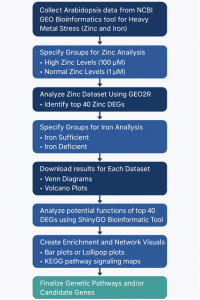
Figure 1: Research Methodology. The steps, bioinformatics tools, and database used in this study. The research methods started from data collection and extended through to functional analysis. Data for Arabidopsis was collected as datasets from NCBI GEO, then differential gene expression analysis was done using the GEO2R bioinformatics tool. This was followed by functional and pathway enrichment analysis of key genes using ShinyGo bioinformatics tool to determine potential functions and enrichment of key genes and pathways via Gene Ontology and KEGG databases.
Identification of the Top Differentially Expressed Genes (DEGs)
To identify the most significantly differentially expressed genes, genes whose activity levels (expression) are significantly higher (or lower) in one biological condition compared to another (in this case, the top 30 for both iron and zinc), statistical analysis was applied. This process used p-values, ensuring that p-values < 0.001 or 1 * 10^-3, to ensure statistical significance, and to prioritize the most important genes based on their differential expression across samples. This statistical analysis was applied separately to the zinc and iron data, and the top 30 DEGs were identified in both data sets.
Functional and Enrichment Analysis Using ShinyGo, GO and KEGG Bioinformatics Tools
Then ShinyGo bioinformatics tool (ShinyGO) [9] and databases were utilized to analyze the potential functions of these top 30 genes. These tools helped uncover the potential roles of the genes expressed during overexposure to heavy metals such as zinc and iron. The results were displayed using GO (Gene Ontology). Gene Ontology (GO) is a standardized system used to describe and categorize the functions of genes and their products across different organisms. It is subdivided into three non-overlapping categories: Molecular Function, Biological Process, and Cellular Component, each describing a different aspect of how a gene or gene product works within a cell [10, 11]. In this study, GO enrichment analysis was used through ShinyGO to predict the biological roles of the top differentially expressed genes identified under iron and zinc stress in Arabidopsis thaliana. KEGG (Kyoto Encyclopedia of Genes and Genomes) is a knowledge base for the analysis of gene functions, allowing us to link genetic information with higher-order functional information, such as gene pathways, mechanisms, and functions. Its PATHWAY database contains graphical representations of cellular processes such as metabolism, membrane transport, signal transduction, and cell cycle [12,13]. In this study, KEGG pathway analysis was used to identify and visualize which biological pathways were significantly expressed in Arabidopsis thaliana under heavy metal stress of iron and zinc.
RESULTS
Identification of Differentially Expressed Genes
GEO2R housed by NCBI [8] was the first tool used to analyze and identify differentially expressed genes in Arabidopsis thaliana exposed to zinc and iron heavy metals (Figure 2). It analyzed the zinc dataset GSE96589 and identified 22,785 total genes, of which 25 were differentially expressed between high zinc conditions and normal zinc levels. (Figure 2A). For the iron dataset GSE137201, it identified 21,199 total genes, of which 1,611 were differentially expressed between iron-deficient and iron-sufficient conditions. (Figure 2B). The volcano plot for each (Figure 2 left panel) represents each gene as a single dot. Red dots represent upregulated genes: genes expressed at significantly higher levels under the stress condition. Blue dots represent downregulated genes: genes expressed at significantly lower levels. Black/grey dots represent genes with no statistically significant difference in expression between the two groups.
The venn diagrams (Figure 2 right panel) show each dataset was analyzed separately, so the diagrams display one group each (High Zinc vs Control, and Iron Deficient vs Iron Sufficient) rather than comparing the two datasets against each other directly. The overlap between iron and zinc DEGs was instead inferred through the shared pathway enrichments found in ShinyGO, particularly the shared activation of secondary metabolite biosynthesis and phenylpropanoid pathways, rather than a direct gene-level overlap diagram.
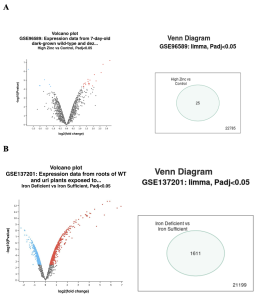
Figure 2: Identification of Differentially Expressed Genes for Zinc and Iron Exposure: Figure A shows a volcano plot on the left, representing the difference in gene expression or activity in Arabidopsis samples in high Zinc level (100 uM) versus normal Zinc levels (1 uM). Some genes are up-regulated (red dots) while a few genes are down-regulated (blue dots). The majority of genes show no significant difference in gene expression between the two treatments. The Venn diagram shows the specific number of genes identified in this study (22,785) and the genes that are differentially expressed in the 2 groups as 25. Figure B shows a volcano plot on the left representing more up-regulated or highly expressed genes (red dots) and down-regulated genes (blue dots), and many fewer genes are expressed the same between the treatments (black dots). The Venn Diagram shows the specific number of genes identified in this study (21,199) and the genes that are differentially expressed in the 2 groups, as 1611.
Potential Functions and Enrichment of the Identified Genes and/or Pathways
The ShinyGo bioinformatics enrichment tool was used to determine the potential functions of the top DEGs following Zinc treatment. Zinc treatment caused clear changes in Arabidopsis thaliana related to ion balance, stress protection, and cell wall processes (Figure 3). In Figure 3A, pathway analysis showed strong involvement of phenylpropanoid biosynthesis. This pathway helps the plant make compounds that strengthen the cell wall, such as lignin, and also produce natural antioxidants. These changes suggest that under zinc stress, the plant works to protect itself by controlling metal levels, reducing damage, and strengthening its structure.
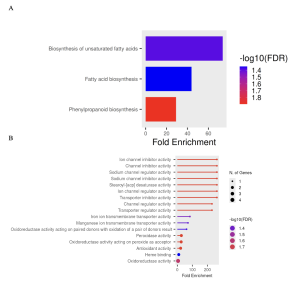
In Figure 3B, plants exposed to zinc showed responses that help control how much metal enters and moves within the plant, preventing excess buildup. At the same time, enzymes that help reduce stress and remove harmful molecules were more active, showing that the plant was protecting itself from oxidative damage. The plant also adjusted its cell membranes and overall chemical activity to cope with the stress.
Figure 3: Zinc treatment triggers balance of ions, stress defense via oxidation and synthesis of plant cell wall related compounds. 3A) When exposed to Zinc, Arabidopsis responds by protecting itself from taking in too many ions or metals, activating enzymes that reduce stress and remove harmful molecules. It also strengthens its membranes and adjusts its chemical reactions. All these responses connect to phenylpropanoid biosynthesis (3B), a pathway that helps the plant build stronger cell walls and provides natural antioxidants to help the plant code with zinc stress.
On the other hand, iron treatment led to changes in gene activity and pathways involved in making secondary metabolites (Figure 4). In Figures 4A and 4B, several pathways linked to secondary metabolite production were activated. These pathways help the plant respond to stress by producing compounds that remove harmful substances and reduce damage.
Many of these pathways are part of secondary metabolite biosynthesis, which supports stress protection. The compounds produced also help strengthen the cell wall and protect the plant’s cells. Overall, these results show that under high iron conditions, the plant activates protective pathways to reduce stress and maintain normal growth.
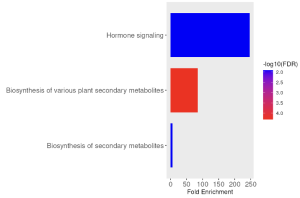
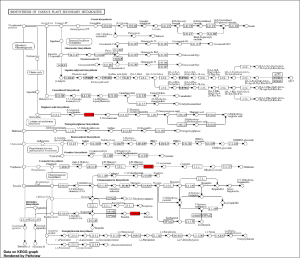
Figure 4: Iron Treatment affects genes and the pathway involved in the synthesis of secondary metabolites. 4A and B. The significant pathways activated are multiple branches of secondary metabolite biosynthesis that all help to detoxify stress, strengthen cell walls and produce protective compounds to maintain growth under high iron conditions.
Table 1: Summary of Key Pathways and Genes Identified in this Study
Key Pathway/Gene Identified in this Study | Role in Protective Mechanisms from Heavy Metals in Arabidopsis |
Phenylpropanoid Biosynthesis | Produces lignin, flavonoids, and phenolic compounds that reinforce cell walls and provide antioxidant capacity against zinc-induced oxidative stress |
Fatty Acid Biosynthesis | Enables membrane remodeling to adjust membrane fluidity and permeability, limiting further zinc ion uptake into cells |
Ion Channel Inhibitor / Metal Ion Transmembrane Transporter Activity | Downregulates or inhibits excess ion uptake, preventing toxic zinc accumulation inside cells |
Biosynthesis of Secondary Metabolites | Broad activation of detoxification pathways that produce protective compounds, remove harmful substances, and reduce oxidative damage under high iron conditions |
Biosynthesis of Various Plant Secondary Metabolites (flavonoid, terpenoid, phenylpropanoid sub-branches) | Strengthens cell walls and produces protective compounds to maintain normal growth; mirrors zinc response, suggesting a shared multi-metal defense logic |
Hormone Signaling (Jasmonic Acid / Salicylic Acid pathways) | Salicylic Acid pathways – Coordinates systemic downstream defense gene expression across the plant in response to iron-induced abiotic stress; integral to iron homeostasis |
DISCUSSION
Summary of Findings
This study aimed to identify the genes and biological pathways activated in Arabidopsis thaliana in response to combined iron and zinc stress, using publicly available GEO datasets analyzed through the GEO2R and ShinyGO bioinformatics platforms. Analysis of the iron dataset GSE137201 yielded 30 significant DEGs across iron-sufficient and iron-deficient conditions, and analysis of the zinc dataset GSE96589 yielded 30 significant DEGs across high-zinc and control conditions. GO enrichment of zinc-responsive genes pointed to molecular functions related to ion channel regulation, oxidoreductase and peroxidase activity, antioxidant function, and metal ion transport. KEGG pathway analysis linked zinc-responsive genes primarily to phenylpropanoid biosynthesis, fatty acid biosynthesis, and unsaturated fatty acid biosynthesis. For iron-responsive genes, KEGG enrichment revealed strong activation of secondary metabolite biosynthesis pathways and hormone signaling. Taken together, these findings point to a coordinated multi-layered genetic defense response involving antioxidant production, structural reinforcement of cell walls, lipid remodeling, and hormonal regulation.
Specifically, differentially expressed genes (DEGs) were identified when Arabidopsis was exposed to zinc and iron, but not to the same extent. There were more DEGs in the presence of iron (Figure 2B) than zinc (Figure 2A).
Very few studies have investigated the impact of high zinc and high iron on gene expression in Arabidopsis thaliana.. The few that have done so do not solely focus on Arabidopsis. For example, one study compared the extent of genes expressed differently or were responsive in the presence of high zinc and iron concentrations comparing Arabidopsis with another plant species Thlaspi caerulescens that is known to tolerate high concentrations of zinc. They found that genes were more responsive to zinc [14]. However, in our study, we only focussed on Arabidopsis thaliana (Figure 2).
Another study compared levels of iron and zinc in a different plant species, Pearl millet (Pennisetum glaucum L.) but specifically in specific plant organs [15] . Their root analysis revealed 345 DEGs under iron-deficient conditions, 1,278 DEGs under zinc deficiency, and 1,309 DEGs under combined iron and zinc deficiency relative to the control. Among these, 16 genes were commonly regulated across all three nutrient-stress treatments. Additionally, 221, 833, and 873 DEGs were uniquely associated with iron deficiency, zinc deficiency, and combined iron-zinc deficiency, respectively, indicating distinct responses to each stress condition. Although this was in a different plant species, it is evident that iron and zinc exposure, whether high or low, impacts the differential expression of specific genes, as shown in our results (Figure 2).
To determine the potential functions of the identified top differentially expressed genes (Figure 2), functional enrichment was conducted using Gene Ontology ( GO), and the GO enrichment results for zinc stress reveal that the plant is under metabolic pressure, attempting to manage the heavy-metal overload through multiple genetic mechanisms. Ion channel inhibitor activity and sodium/metal-ion transmembrane transporter activity suggest that Arabidopsis actively downregulates or inhibits the uptake of excess ions under zinc stress, a known response that prevents toxic ion accumulation in cells. [1] The enrichment of oxidoreductase, peroxidase, and antioxidant activity terms reflects the process of reactive oxygen species (ROS) generation under heavy metal stress, which the plant counters by upregulating ROS-scavenging enzymes. [2]
The enrichment of phenylpropanoid biosynthesis as the top KEGG pathway under zinc treatment is particularly significant. The phenylpropanoid pathway produces lignin, flavonoids, and other compounds that reinforce plant cell walls and provide antioxidant capacity. [3] This suggests that under zinc excess, Arabidopsis strengthens its structural defenses while simultaneously increasing its antioxidant properties. The co-enrichment of fatty acid and unsaturated fatty acid biosynthesis pathways further implies membrane restructuring, likely to adjust membrane fluidity and permeability to limit further metal ion uptake.
For iron-responsive genes, the dominant enrichment of secondary metabolite biosynthesis pathways and hormone signaling reflects a broader stress response. Hormone signaling, particularly jasmonic acid (JA) and salicylic acid (SA) pathways, is frequently activated during abiotic stress and can coordinate downstream defense gene expression across the plant. [4] The activation of multiple secondary metabolite sub-pathways (flavonoid, terpenoid, phenylpropanoid) under iron stress parallels the zinc response, suggesting a shared defense mechanism even though the specific triggering conditions differ.
These findings are consistent with existing literature on heavy metal stress responses in Arabidopsis [16], demonstrating that iron deficiency in Arabidopsis triggers strong transcriptional reprogramming, particularly in genes encoding metal transporters and reductases, which aligns with the iron-responsive transporter-related genes identified in the present study [5]. With respect to zinc [17] identified that zinc hyperaccumulation involves differential regulation of ZIP family metal transporters, consistent with the ion channel and transporter-related GO terms enriched in our zinc dataset [6]. The enrichment of phenylpropanoid biosynthesis under both iron and zinc conditions supports the fact that flavonoid and phenylpropanoid pathways are frequently upregulated as part of a generalized stress response that provides both structural and chemical protection to plants [7]. The activation of hormone signaling pathways in the iron-stressed group has also been reported previously [18], highlighting crosstalk between iron deficiency signaling and jasmonate/ethylene pathways in Arabidopsis, suggesting these hormonal networks are integral to iron homeostasis [8].
Importantly, the overlap between zinc and iron responses, particularly the shared activation of secondary metabolite biosynthesis, supports the hypothesis that plants use a partially shared “multi-metal” defense mechanism, a concept that has received limited direct experimental attention and represents a meaningful contribution of the present work.
Implications
The identification of specific pathways activated under iron and zinc co-stress has meaningful implications for agricultural biotechnology and food safety. The phenylpropanoid and secondary metabolite biosynthesis pathways represent promising targets for genetic engineering aimed at developing metal-tolerant crop varieties. By overexpressing key regulatory genes within these pathways, it may be possible to produce crops that maintain yield and nutritional quality even in metal-contaminated soils, reducing economic losses and protecting food safety in regions affected by industrial or mining pollution. Additionally, the hormone signaling genes identified under iron stress may serve as candidates for biomarker development, enabling early detection of metal stress in agricultural settings before visible crop damage occurs. The antioxidant-related genes identified in the zinc dataset could similarly inform the development of stress-resilient plant varieties with enhanced natural ROS-scavenging capacity, which would have broader applications beyond heavy metal tolerance, including drought and pathogen resistance.
Limitations
This study has several important limitations to acknowledge. Since the analysis relied on publicly available microarray datasets from other research teams, the findings reflect those studies’ original experimental conditions rather than a setup designed specifically for dual iron-zinc stress. Therefore, results from our study need to be verified in a laboratory setting. Most importantly, the two datasets represent separate experiments; one for iron, one for zinc; meaning true simultaneous co-exposure was never directly measured. The overlapping pathways we identified are therefore suggestive, not conclusive. The candidate genes will still need wet-lab validation through methods like RT-qPCR and mutant studies before firm conclusions can be drawn. Additionally, microarray platforms are less sensitive than modern RNA-sequencing, so some relevant genes may have gone undetected. As a purely bioinformatics-based study, no plant samples were directly handled, and the findings would need further empirical testing before being applied to real agricultural settings.
Future Directions
Future research should prioritize designing experiments in which Arabidopsis thaliana is exposed to iron and zinc simultaneously at varying concentrations, with RNA-seq used to capture a more sensitive and complete profile of the dual-metal response. The candidate genes identified in this study, particularly those associated with phenylpropanoid biosynthesis, ion transport, and hormone signaling, should be validated in the laboratory through gene expression assays and loss-of-function mutant studies to determine whether their differential expression is causally linked to metal tolerance or merely correlational. Beyond Arabidopsis, future work should examine whether homologous genes in agriculturally relevant crop species such as rice, wheat, and maize exhibit similar expression patterns under heavy metal stress, as this would greatly expand the translational value of these findings. Longer-term, the insights generated here could support the development of transgenic or CRISPR-edited crop varieties with enhanced metal tolerance, as well as phytoremediation strategies in which plants are engineered to accumulate and neutralize excess soil metals more efficiently, contributing to both cleaner soils and safer food production systems.
References
- van Dijk, J. R., Kranchev, M., Blust, R., Cuypers, A., & Vissenberg, K. (2022). Arabidopsis root growth and development under metal exposure presented in an adverse outcome pathway framework. Plant, cell & environment, 45(3), 737–750.
- Angon, P. B., Islam, Md. S., Kc, S., Das, A., Anjum, N., Poudel, A., & Suchi, S. A. (2024). Sources, effects and present perspectives of heavy metals contamination: Soil, plants and human food chain. Heliyon, 10(7), e28357–e28357. https://doi.org/10.1016/j.heliyon.2024.e2835
- Aziz, K., Mustafa, F., Omer, K. M., Hama, S., Hamarawf, R. F., & Rahman, K. O. (2023). Heavy metal pollution in the aquatic environment: efficient and low-cost removal approaches to eliminate their toxicity: a review. Heavy Metal Pollution in the Aquatic Environment: Efficient and Low-Cost Removal Approaches to Eliminate Their Toxicity: A Review, 13(26), 17595–17610.
- Muhammad Bilal Hafeez, Ramzan, Y., Khan, S., Danish Ibrar, Bashir, S., Zahra, N., Rashid, N., Nadeem, M., Saleem Ur Rahman, Shair, H., Ahmad, J., Hussain, M., Irshad, S., Abdulrahman Al-Hashimi, Alanoud Alfagham, & Diao, Z.-H. (2021). Application of Zinc and Iron-Based Fertilizers Improves the Growth Attributes, Productivity, and Grain Quality of Two Wheat (Triticum aestivum) Cultivars. Frontiers in Nutrition, 8.
- Asati A, Pichhode M, Nikhil K. Effect of heavy metals on plants: an overview. International Journal of Application or Innovation in Engineering & Management. 2016 Mar;5(3):56-66
- Li, J., Zhang, M., Sun, J., Mao, X., Wang, J., Liu, H., Zheng, H., Li, X., Zhao, H., & Zou, D. (2020). Heavy Metal Stress-Associated Proteins in Rice and Arabidopsis: Genome-Wide Identification, Phylogenetics, Duplication, and Expression Profiles Analysis. Frontiers in Genetics, 11.
- Hudson, L. G., Dashner-Titus, E. J., & MacKenzie, D. (2025). Zinc as a Mechanism-Based Strategy for Mitigation of Metals Toxicity. Current Environmental Health Reports, 12(1), 5.
- Emily Clough, Tanya Barrett, Stephen E Wilhite, Pierre Ledoux, Carlos Evangelista, Irene F Kim, Maxim Tomashevsky, Kimberly A Marshall, Katherine H Phillippy, Patti M Sherman, Hyeseung Lee, Naigong Zhang, Nadezhda Serova, Lukas Wagner, Vadim Zalunin, Andrey Kochergin, Alexandra Soboleva, NCBI GEO: archive for gene expression and epigenomics data sets: 23-year update, Nucleic Acids Research, Volume 52, Issue D1, 5 January 2024, Pages D138–D144
- Steven Xijin Ge, Dongmin Jung, Runan Yao, ShinyGO: a graphical gene-set enrichment tool for animals and plants, Bioinformatics, Volume 36, Issue 8, April 2020, Pages 2628–2629
- Louis du Plessis, Nives Škunca, Christophe Dessimoz, The what, where, how and why of gene ontology—a primer for bioinformaticians, Briefings in Bioinformatics, Volume 12, Issue 6, November 2011, Pages 723–735
- Huntley R, Sawford T, Martin M, Donovan C. Understanding how and why the Gene Ontology and its annotations evolve: the GO within UniProt. GigaScience 2014.
- Kanehisa M, Goto S. KEGG: kyoto encyclopedia of genes and genomes. Nucleic Acids Res. 2000 Jan 1;28(1):27-30. doi: 10.1093/nar/28.1.27. PMID: 10592173; PMCID: PMC102409.
- Du J, Li M, Yuan Z, Guo M, Song J, Xie X, et al. A decision analysis model for KEGG pathway analysis. BMC Bioinformatics [Internet]. 2016.
- van de Mortel, J. E., Almar Villanueva, L., Schat, H., Kwekkeboom, J., Coughlan, S., Moerland, P. D., Ver Loren van Themaat, E., Koornneef, M., & Aarts, M. G. M. (2006). Large Expression Differences in Genes for Iron and Zinc Homeostasis, Stress Response, and Lignin Biosynthesis Distinguish Roots of Arabidopsis thaliana and the Related Metal Hyperaccumulator Thlaspi caerulescens . Plant Physiology, 142(3), 1127–1147. https://doi.org/10.1104/pp.106.082073
- Goud CA, Satturu V, Malipatil R, Viswanath A, Semalaiyappan J, Kudapa H, Rathod S, Rathore A, Govindaraj M and Thirunavukkarasu N (2022) Identification of iron and zinc responsive genes in pearl millet using genome-wide RNA-sequencing approach. Front. Nutr. 9:884381. doi: 10.3389/fnut.2022.884381
- Colangelo, E. P., & Mary Lou Guerinot. (2004). The Essential Basic Helix-Loop-Helix Protein FIT1 Is Required for the Iron Deficiency Response. The Plant Cell, 16(12), 3400–3412. https://doi.org/10.1105/tpc.104.024315
- Pence, N. S., Larsen, P. B., Ebbs, S. D., Letham, D. L. D., Lasat, M. M., Garvin, D. F., Eide, D., & Kochian, L. V. (2000). The molecular physiology of heavy metal transport in the Zn/Cd hyperaccumulator Thlaspi caerulescens. Proceedings of the National Academy of Sciences, 97(9), 4956–4960.
- Brumbarova, T., Bauer, P., & Ivanov, R. (2015). Molecular mechanisms governing Arabidopsis iron uptake. Trends in Plant Science, 20(2), 124–133.


